
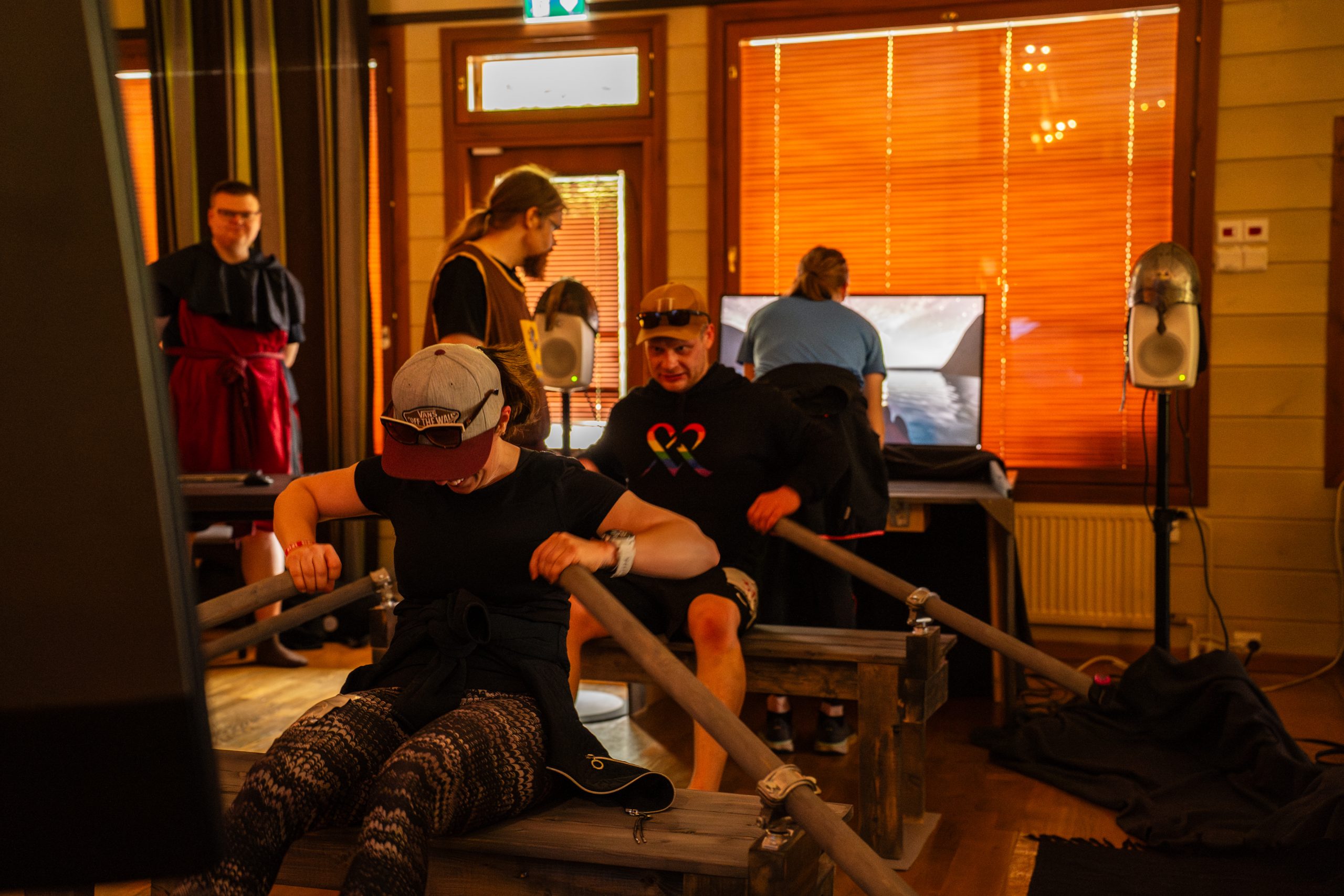
MOCAPPE has implemented a Viking-themed rowing demo game together with the VTL-project . In this action packed game, a physical game board is combined with motion capture rowing and cooperative play. We also had collaboration with Rovaniemen Boffaajat ry, MetaHealthVerseTech and XR Health Edu in making of the game.
The starting point of the rowing game was to create a functional and easily accessible exercise experience that can be used, for example, as a checkpoint task requiring cooperation at events. The Viking boat sailed both in the TEQU Business Festival and Adventure Race of 2026, pictures of which you can find on this blog!
The goal was to build a game experience where players have to work together physically and digitally. At the same time, the project wanted to try new ways to utilize motion capture technology in event environments.
In the game experience, players are Vikings whose goal is to escape from Canada to the open sea. Before the rowing leg, players build a map of the playing area from square blocks. The map is made up of various landmarks, obstacles and dangers, such as sea monsters, that affect the route. Once the map is complete, the rowing leg itself begins.
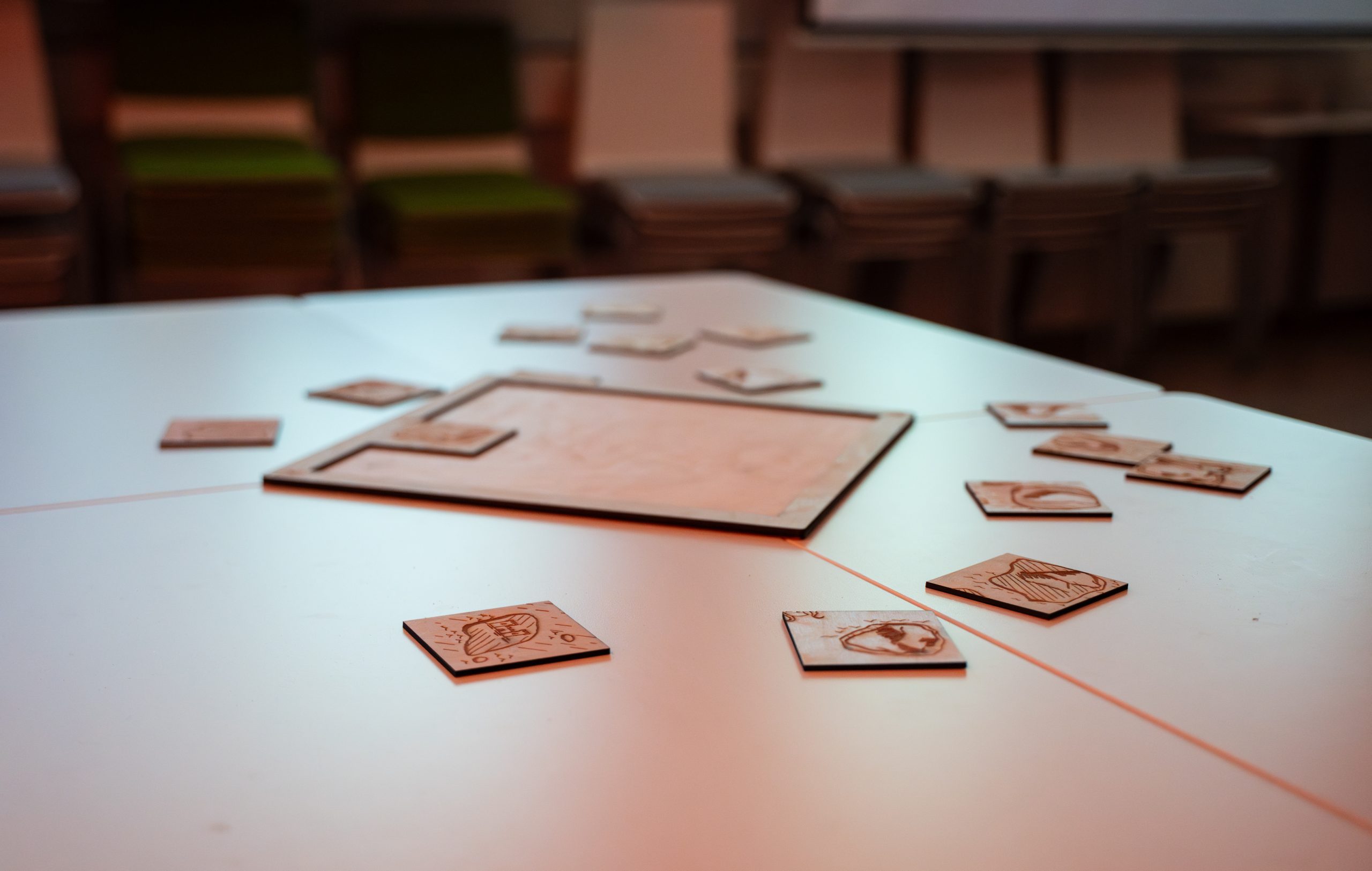
Can you put together a map to guide the rowers in the right direction?
In the game, up to four players act as rowers, one player steers the boat as captain and one acts as a map reader. The game field also presents surprising challenges along the way, so precise steering is necessary not to fail! The cooperation of all players is crucial to success in progress, and the boat moves faster in the game the more efficiently the rowers work together. When the boat reaches the open sea, the game is won!
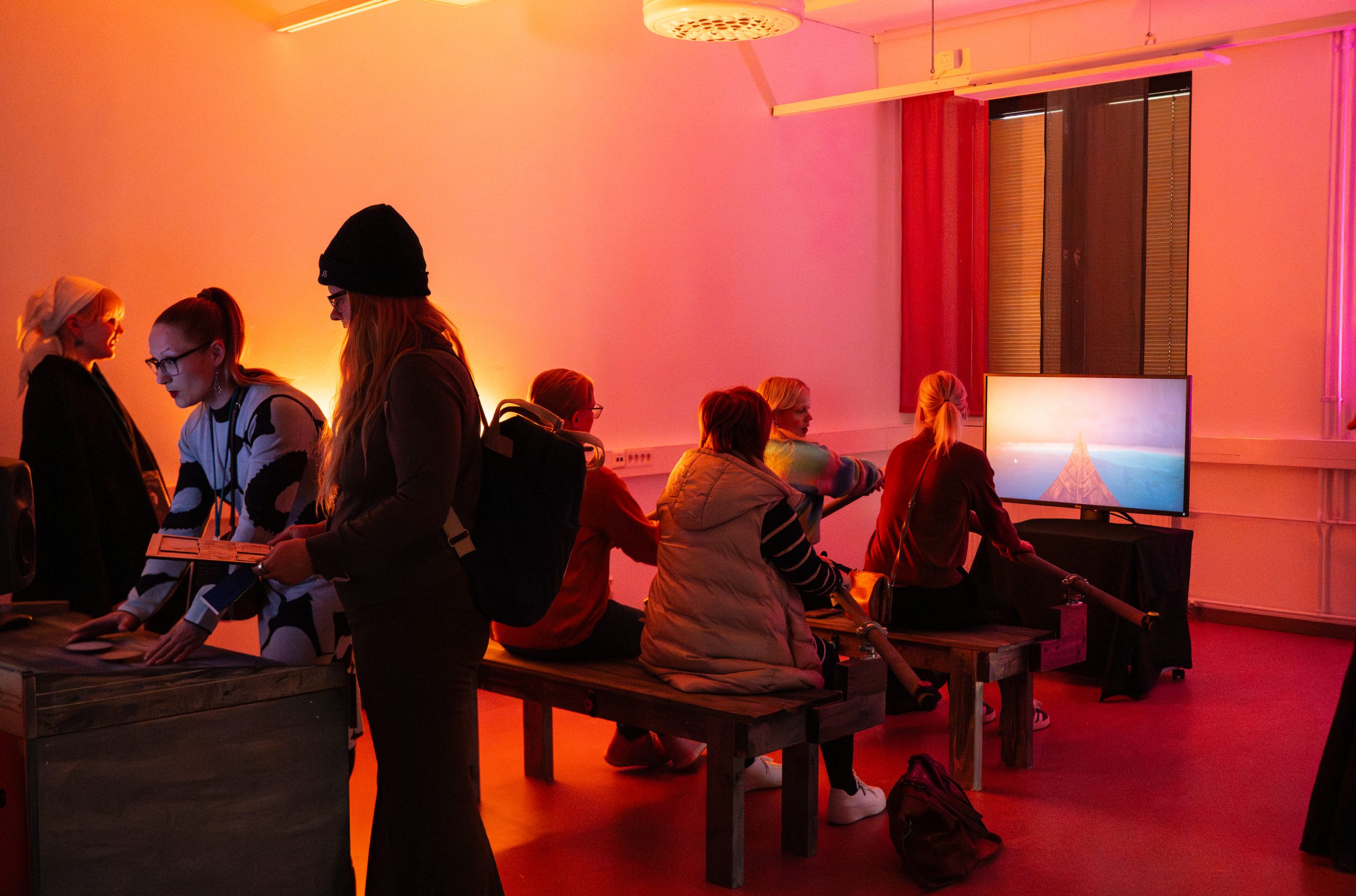
A team rowing at TEQU’s Business Festival 2026
The interactive rowing section was built using the Unreal 5 game engine, and Blender software was used to model the game environments. The physical map was made of plywood by laser cutting and engraving, which brought a tangible board game-like element to the game alongside the digital experience. So, the gameplay was implemented using many different ways and technologies!
At the heart of the project were Sony’s Mocopi motion capture sensors, which were tested in a slightly “unusual” way. The sensors were attached to the oars instead of the players’ bodies. The original goal was that the oar movement seen in the game would fully correspond to the players’ real movements. In practice, this turned out to be more challenging than expected, as the sensor software is primarily designed to recognize the movements of a human character.
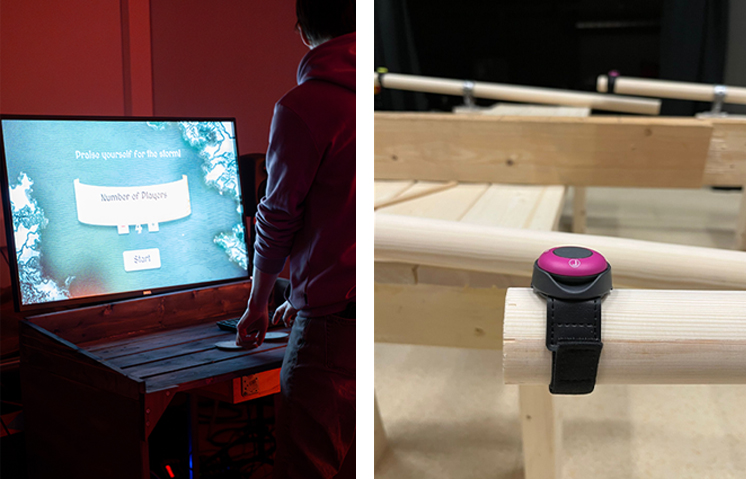
Captain’s control panel and Mocopi sensors attached to the oars
When the sensors were attached to the oars, the movements deviated so much from normal human movement that the system’s AI-based processing caused interference. In the final implementation, the program did not copy the oar movement completely as it was into the game, but read the changes in the movement and their speed. Based on this information, the game controlled the finished rowing animation. In practice, this means that the faster the players row in the real world, the faster the boat moves in the game world.
The technical process also provided valuable information on how motion capture technology can be applied outside of traditional character animation. Although the Mocopi sensors did not work completely as intended for this purpose, the experience taught new possibilities for combining physical movement, gameplay and event experiences into a single whole. From the perspective of further development, gyroscope-based solutions, for example, could offer a simpler and more technically stable alternative to similar implementations.
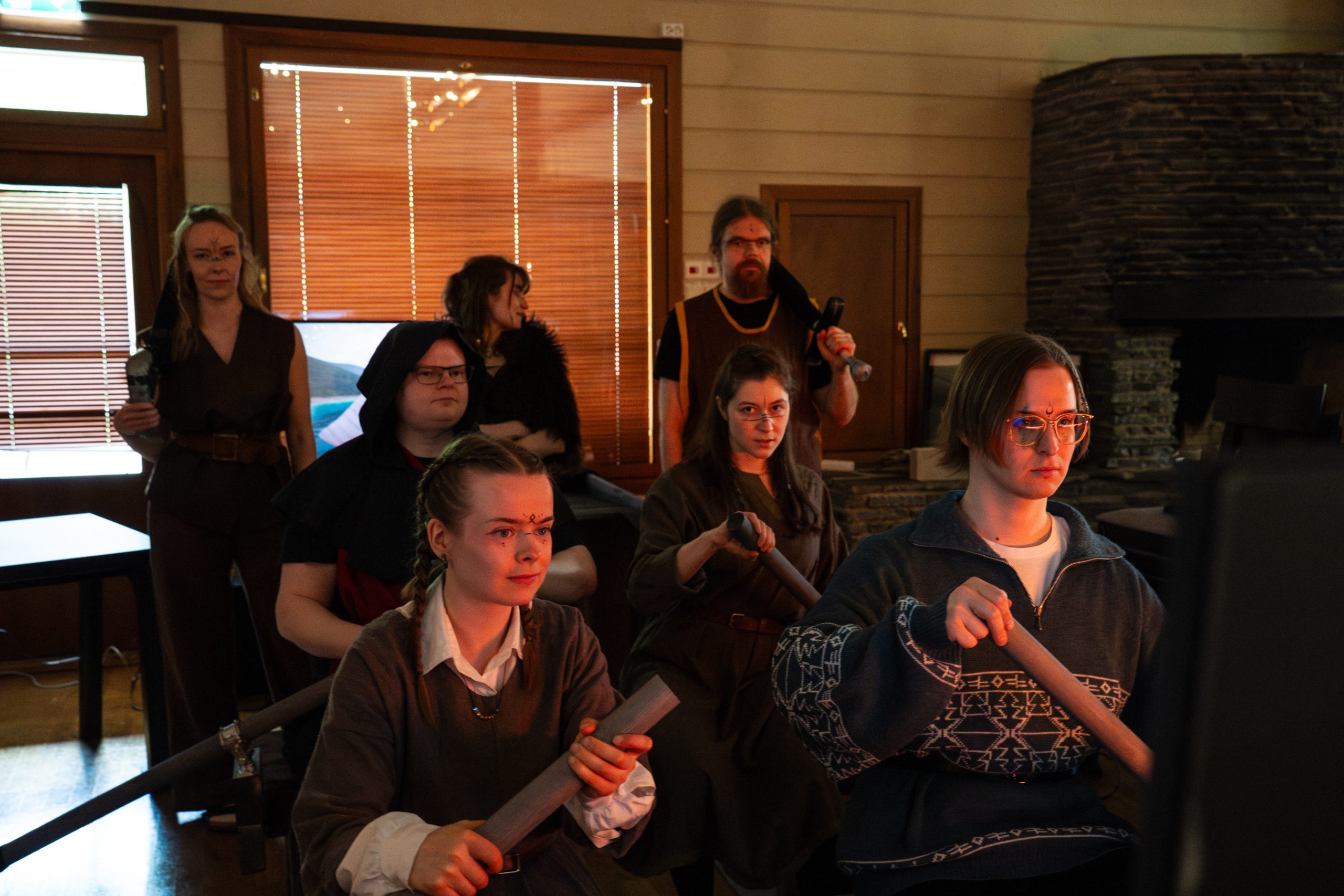
Thank you to our awesome team arranging the checkpoint at Adventure Race!
Special thanks to everyone involved in the project, as well as TEQU and Adventure Race, at whose events we were able to demo the rowing game!